
When I first started writing fiction — roughly a hundred years ago — the plan was simple: publish on Amazon. And I did! I put a couple of stories up there that I’ve since taken down, mostly because they weren’t very good and needed work. (The full, deeply ADHD explanation of why they weren’t ready is a whole post of its own — the one about the memory hoarder living in my skull.)
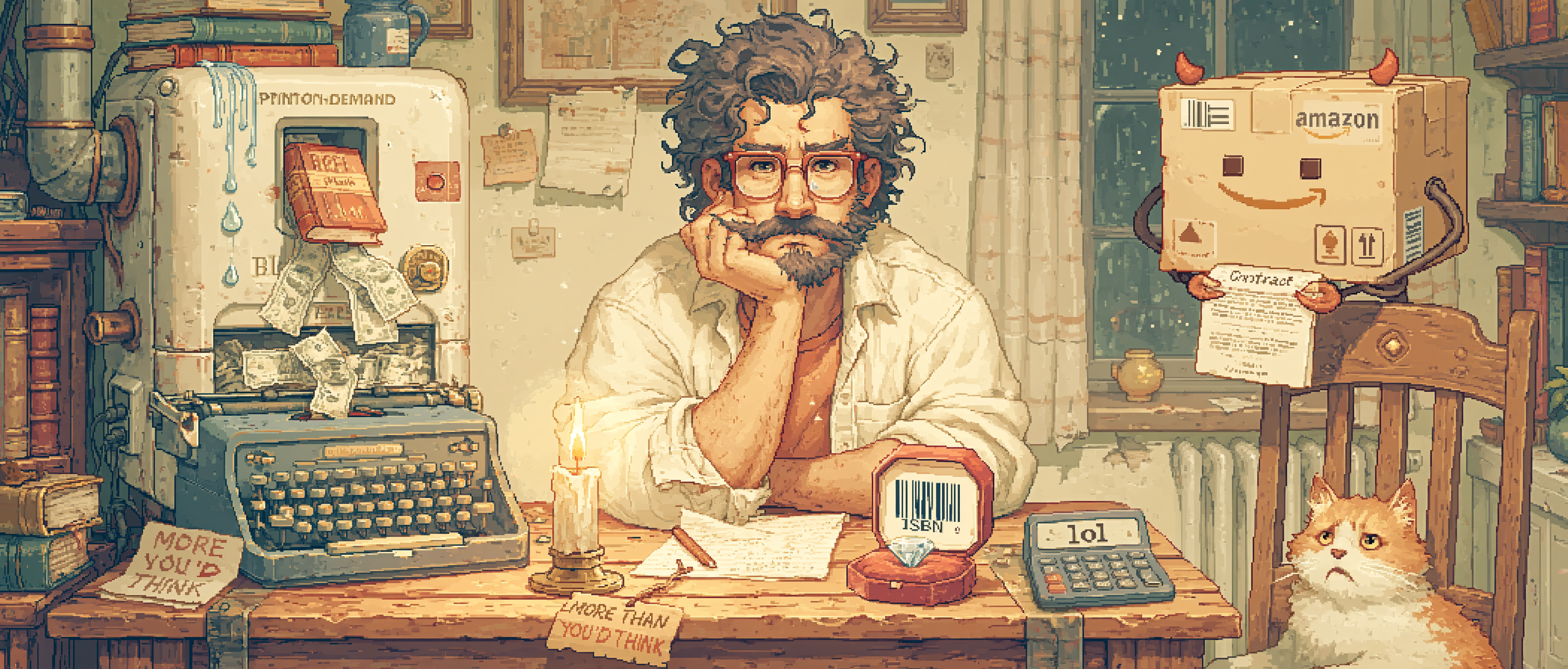
The problem now is that I have some books I actually think are good, and I want to publish them. But Amazon is the devil, and I don’t especially want to hand the devil my money. Which means selling ebooks on their platform is kind of out.
So I’ve been doing some research on alternatives, because I want people to be able to read these things, and it turns out there isn’t a great unified way to get an ebook into a stranger’s hands. I can sell the book on a site I own — but then the reader has to figure out how to sideload it onto their e-reader, and now I’ve turned “buy my book” into a tech support ticket.
So do I just suck it up and also put it on Amazon, purely for the accessibility? That’s the question that keeps circling.
Physical books, on the other hand, have gotten genuinely interesting since I last looked. Print-on-demand is a real thing now — I can sell paperbacks on my own site and have them shipped straight to people. It’s even possible to set it up so that bookstores can order copies, with the same returnability they get from traditional publishers. That’s wild. That’s the kind of thing that makes the whole imaginary bookstore-shaped part of my brain light up.
But here’s what else has happened: everything got more expensive. Covers, editing, layout — all of it has gone up, and rightfully so, because that’s skilled work. And ISBNs are not cheap. That part stings, because if I want to sell to bookstores and make the books look as “real” as possible, they need an ISBN. But will I sell enough copies to make that money back? How important is “publishing a real book” to me, versus “not throwing money into a hole”?
I’ll probably figure out the ISBN thing, because I do have a few books I genuinely think people will enjoy. But it’s a lot. All-in, professional services plus an ISBN runs at least a thousand dollars per book — and that’s going cheap on some of it.
This must be why all indie authors are rich.
Stay broke, publish anyway, and never, ever do the math twice.