
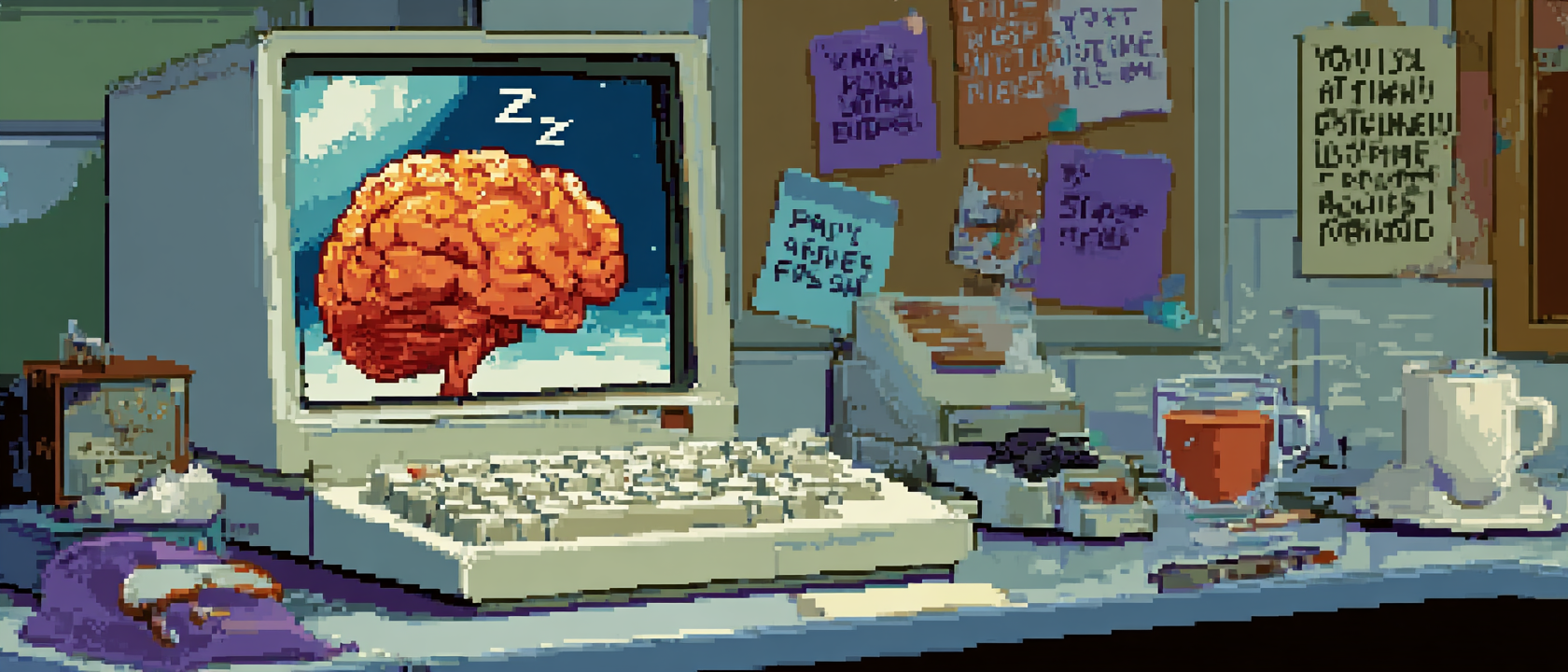
So there’s a new study out of Monash University that essentially confirmed what I have been telling people for years, which is that my brain just leaves sometimes.
The actual science is this: researchers put 32 adults with ADHD and 31 neurotypical controls through a sustained attention task while monitoring their brains with EEG. What they found is that the ADHD brains were producing significantly more slow-wave activity during waking hours. Slow waves. As in the kind your brain makes when it’s asleep. My brain is literally taking micro-naps while I am trying to function as a human being and nobody told it that was an option.
The study was published in the Journal of Neuroscience this month and the lead researcher, Elaine Pinggal, described it like this: “Everyone experiences these brief moments of sleep-like activity. In people with ADHD, however, this activity occurs more frequently.” Which is the most diplomatic way anyone has ever said “your brain is playing hooky more than other people’s brains.”
Here’s what I love about ADHD research. Every few months someone publishes a paper that scientifically validates something I’ve been experiencing my entire life and couldn’t explain. The slow-wave thing maps perfectly onto what happens to me on tired days. I will be mid-thought, fully engaged, and then just… not be there anymore. Not asleep. Not distracted by something shiny. Just gone. Like my brain hit a loading screen and forgot to tell the rest of me. I’ll come back a few seconds later and have no idea what I was doing or saying. Sarah has witnessed this enough times that she doesn’t even comment on it anymore. She just waits.
The study found that higher slow-wave density correlated with more omission errors (forgetting to respond), slower reaction times, and greater variability in how fast people responded. Which, if you’ve ever watched me try to have a conversation when I’m running on five hours of sleep, you’ve seen all three of those in real time. The lights are on. Someone is occasionally home. The schedule is unpredictable.
But here’s the part that actually made me sit up (while presumably my brain was trying to lie down). The researchers noted that auditory stimulation during deep sleep has been shown to boost slow-wave activity during actual sleep, which then reduces these rogue slow-wave intrusions during the day. Meaning there might be a non-pharmacological intervention where you play specific sounds while sleeping that helps your brain do its sleeping at the correct time instead of during a conversation about what to have for dinner.
I have so many questions about this. What sounds? Is it pink noise? Binaural beats? Do I need a specific app? Can I just duct-tape headphones to my head and play whale sounds? Because I will absolutely do that if it means my brain stops clocking out while I’m trying to read a paragraph. I am going to fall down this rabbit hole and I’m going to drag you all with me.
The thing about living with ADHD is that you spend a lot of time thinking something is wrong with you in a vague, personal-failing kind of way. And then a team of neuroscientists at Monash University hooks people up to EEGs and goes “no, your brain is literally falling asleep in patches while you’re awake, it’s a measurable neurological phenomenon” and suddenly you feel a little less broken and a little more like a person with a brain that has a very specific and scientifically documented quirk.
My brain naps. Yours might too. At least now we know why.
Take care of yourselves, get enough sleep (so your brain stops stealing it during the day), and stay curious.