
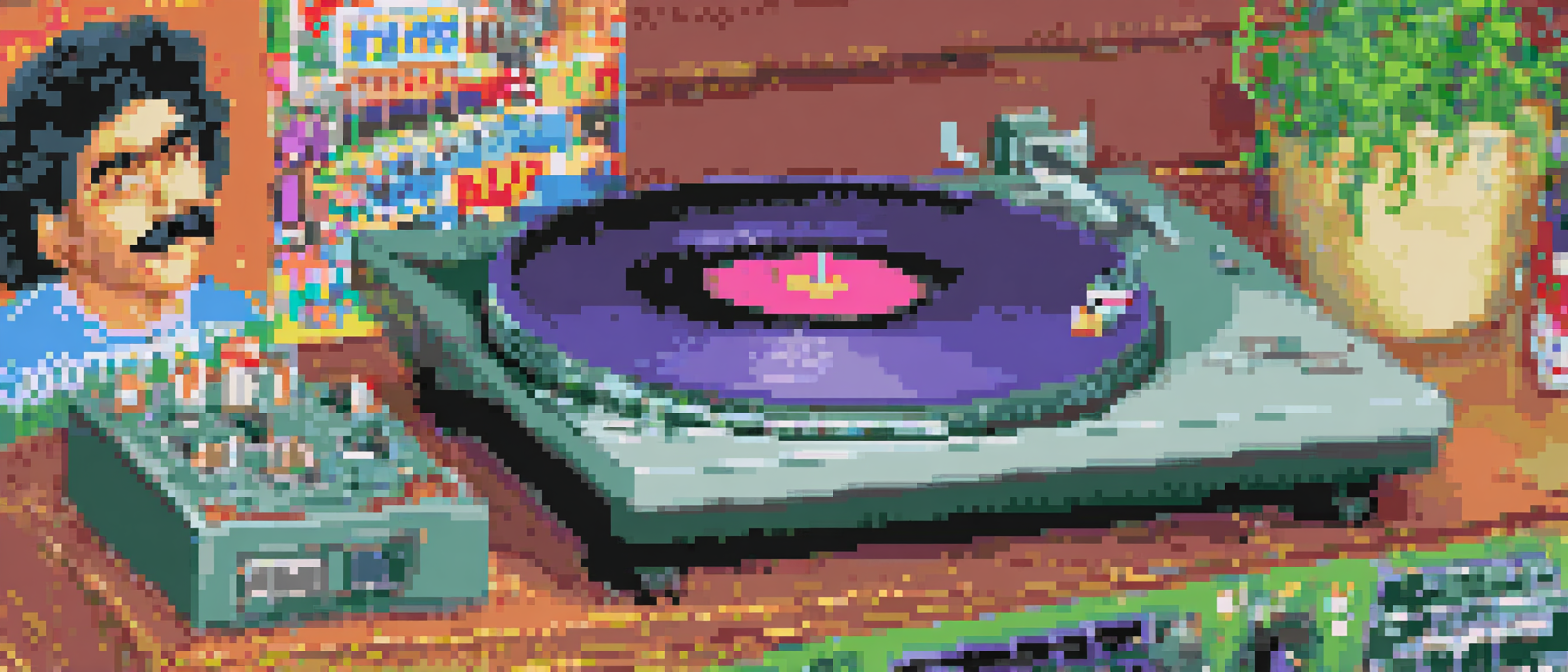
My mother-in-law got me the Jim Croce Definitive Collection on vinyl for my birthday.
I need you to understand something: this is the correct gift. This is the gift that says “I know who you are and what you love and I went and found the physical manifestation of it.” There are people in your life who give you gift cards and people who give you Jim Croce on vinyl and my mother-in-law is in the second category. She gets me. I’ve said this before and I will keep saying it until it becomes my catchphrase.
The Oldies Station
I don’t remember the first time I heard Jim Croce. That’s the thing about growing up with the oldies station — certain artists don’t arrive in your life so much as they were always there, like furniture. You’re riding in the back seat of your parents' car and the radio is on and somewhere between the Beach Boys and the Temptations there’s this voice. This warm, slightly rough, deeply human voice singing about a guy named Leroy Brown who was badder than old King Kong and meaner than a junkyard dog.
And you don’t think about it. You’re a kid. It’s just music. It’s the sound the car makes when you’re going somewhere.
But it gets in. It seeps into whatever part of your brain stores the things that feel like home. And years later you hear those opening notes and you’re back in that car, going somewhere, and the world is the size of the back seat window.
That’s what Jim Croce did to me before I even knew his name.
Sarah
When Sarah and I got together, there was this moment — and I don’t remember exactly when or where — where one of us put on a Croce song and the other one went “wait, you know Jim Croce?”
And that was it. That was the thing.
Because Jim Croce isn’t the artist you bond over at a party. Nobody’s putting “Operator” on the aux cord at a barbecue. He’s not a conversation starter. He’s a quiet, personal thing — the kind of music you listen to alone in your car or on a Sunday morning when the house is still. Finding out that the person you love also carries this music around inside them is like discovering you both have the same secret room in your head.
We started listening to more. Deeper into the catalog. Past the hits and into the album tracks, the live recordings, the stuff that doesn’t show up on the greatest hits compilations that normal people own. It became ours. Some couples have a song. Sarah and I have an entire discography.
The Hits (And Why They’re Hits for a Reason)
I know what you’re thinking. “Time in a Bottle? Bad Bad Leroy Brown? Those are classic rock radio staples. Everybody knows those.”
Yeah. Everybody knows them because they’re perfect.
“Time in a Bottle” is one of the most devastating love songs ever written and it doesn’t raise its voice once. It doesn’t need to. Croce wrote it when he found out Sarah — his wife, also named Sarah, which is a coincidence I choose to find meaningful — was pregnant with their son. It’s a man looking at the life he’s building and trying to grab hold of time with his bare hands. The melody is simple. The guitar work is intricate in a way that sneaks up on you. And the lyrics do that thing where they sound like a greeting card until you actually sit with them and realize they’re about mortality.
He died a year after he recorded it. It went to number one after the plane crash. I’m going to come back to that.
“Operator” is a song about calling a woman who’s moved on, except you’re going through the operator because it’s 1972 and that’s how phones worked. And here’s the genius of it — he never actually makes the call. He keeps talking to the operator, working up the nerve, and then says “never mind, forget about it.” The whole song is about the conversation you have with yourself before you don’t do the brave thing. That’s so specific and so human it hurts.
“Bad Bad Leroy Brown” is just fun. It’s a story-song about a tough guy who messes with the wrong man’s wife and gets beaten into looking “like a jigsaw puzzle with a couple of pieces gone.” The imagery. The rhythm. The way Croce delivers it like he’s telling you this story at a bar and he’s getting to the good part. It’s a perfect pop song and I will not apologize for loving it.
The Character Songs
But here’s where Croce separates himself from every other singer-songwriter of the ’70s, and this is the hill I will build a house on and live in forever:
Jim Croce wrote people.
Not feelings. Not vibes. Not abstract emotional landscapes. People. Specific, vivid, funny, heartbreaking, fully realized human beings with names and jobs and problems.
“Roller Derby Queen." This song is about a man who falls in love with a roller derby player. She’s “five foot six and two-fifteen, a bleached-blonde mama with a streak of mean.” He’s in the stands. She’s destroying people on the track. He’s completely gone for her. It’s ridiculous and specific and somehow genuinely romantic because Croce commits to it completely. He’s not winking at you. He means it. This man is in love with a roller derby player and he wants you to know about it.
“Speedball Tucker." A trucker who drives too fast and lives too hard and thinks he’s the king of the road. Croce paints this guy in two minutes and forty seconds — the truck, the CB radio, the attitude, the inevitable reckoning. You can see him. You can hear the engine. It’s a short story set to music and the music is doing about 90 miles an hour.
“Workin' at the Car Wash Blues." A guy stuck washing cars who knows — knows — he’s meant for bigger things. He’s got a degree. He’s got ambitions. He’s got soap in his eyes and someone else’s dirt under his fingernails. It’s funny because the guy’s complaints are so grandiose compared to his situation, and it’s sad because he might be right, and it’s human because we’ve all felt like we were meant for something other than what we’re doing on any given Tuesday.
“Rapid Roy (The Stock Car Boy)." Roy races stock cars and he’s the fastest there is and the song moves like it’s on wheels. Croce’s guitar keeps pace with the story like it’s drafting behind Roy’s car. It’s pure momentum. Pure joy. The kind of song that makes you drive faster without realizing it.
These aren’t novelty songs. That’s what I need people to understand. It would be easy to write these off as funny little character sketches, but they’re not. They’re empathy exercises. Croce looked at the people around him — the truckers and the dreamers and the fighters and the lovers — and wrote them songs that said “I see you and you’re worth a verse.” He found the poetry in ordinary lives and he didn’t have to dress it up to make it beautiful.
The Vinyl
I’ve listened to Croce on every format. Cassette tapes in my parents' car. CDs. Streaming. The shitty laptop speakers that are the default listening experience of the 21st century.
Vinyl is different.
I put the Definitive Collection on the turntable and dropped the needle and the first thing I noticed was the room. There’s a warmth to vinyl that I know audiophiles have been annoying about for decades, but they’re not wrong. The guitar has space around it. Croce’s voice has texture that digital flattens out. The little imperfections — the barely audible pick noise, the breath before a line — they’re all there, and they matter, because they’re the difference between listening to a recording and listening to a person.
It sounds like he’s in the room. That’s the cliché and I’m using it because it’s true. Jim Croce is in my living room, sitting on something he shouldn’t be sitting on, and he’s telling me about Leroy Brown and the Roller Derby Queen and the guy at the car wash who should’ve been a movie star.
Sarah walked through while “Operator” was playing and just… stood there for a minute. Didn’t say anything. Didn’t need to. We’ve heard that song a hundred times. On vinyl, in our house, on a birthday present from my mother-in-law, it hit different. It hit like it did the first time.
Thirty Years
Jim Croce died on September 20th, 1973. He was thirty years old.
His chartered plane crashed into a tree on takeoff after a concert at Northwestern State University in Louisiana. Everyone on board was killed. His son A.J. was two years old. “Time in a Bottle” hadn’t been released as a single yet — it came out three months later, went to number one, and became the biggest hit of a career that was already over.
I’m not going to dwell on this because Croce’s music doesn’t need the tragedy to justify itself. He doesn’t need to be a sad story. But I think about it sometimes — this man had about four years of real recording career. Four years. Two studio albums that charted. A handful of singles. That’s it. That’s all the time he got.
And in that time he wrote “Time in a Bottle” and “Operator” and “Photographs and Memories” and “I Got a Name” and “Bad Bad Leroy Brown” and every character song I just spent five paragraphs raving about. He wrote enough material that fifty years later his mother-in-law’s mother-in-law is buying his Definitive Collection on vinyl for a guy in Portland who first heard him on the oldies station as a kid and never stopped listening.
Four years. A mustache. A guitar. And every song that matters.
Go Listen
If you’ve only ever heard the hits — and the hits are great, start there, no shame — go deeper. Put on “Roller Derby Queen.” Put on “Speedball Tucker.” Listen to the way he builds a whole person in three minutes. Listen to the guitar work, which is genuinely virtuosic in a way that the pop charts never required him to be. Listen to the live recordings if you can find them, because Croce between songs was as funny and warm as Croce during them.
And if you can, listen on vinyl. Not because I’m a format snob — I literally listen to most of my music through my phone like a normal person — but because Croce’s voice was made for a format that preserves the rough edges. Digital cleans him up. Vinyl lets him breathe.
My mother-in-law gave me Jim Croce on my birthday and it’s the best gift I’ve gotten in years. If you don’t have a mother-in-law who instinctively knows to buy you Jim Croce on vinyl, I’m sorry. You can still buy it yourself. The Definitive Collection is a good place to start. It’s got everything.
Go listen. He only had thirty years. He made every one of them count.