
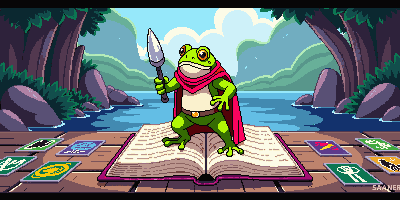
My friend Jon got me Daggerheart for Christmas, and I’ve been sitting with it for a bit now trying to figure out what I want to say about it.
Jon and I have been friends for over 25 years. That’s a long time. That’s the kind of friendship where you don’t need to explain yourself, where someone just knows what you’re into without you having to spell it out. When I opened this gift, I didn’t have to ask why he thought of me. He knows I’m a tabletop nerd. He knows I’ve been following what Critical Role has been doing. He knows I’m the kind of person who gets excited about new systems and spends way too much time thinking about game design. This is the kind of gift that says “I see you” without saying anything at all.
So yeah. The gift itself hit me before I even cracked the book open.
The Book Itself

Let’s talk about the physical object first, because it deserves attention. This is a gorgeous book. The art is fantastic. Every page feels intentional. The layout is clean and readable but still has personality. You can tell a lot of care went into making this thing not just functional but beautiful. There’s something about holding a well-made RPG book that just feels right - the weight of it, the way the pages fall open, the smell of fresh printing. Daggerheart delivers on all of that.
And the races. Oh man, the ancestries they’ve created for this game. Look, I’m a simple person. You put frog people in your fantasy game and you have my attention. That’s just how it works. The Ribbet (yes, that’s what they’re called, and yes, it’s perfect) are exactly the kind of weird, wonderful addition that makes a setting feel alive. Not just the standard elves and dwarves and humans, but actual creative choices that make you want to explore this world.
What Critical Role Is Doing

I’ve been a Critical Role fan since campaign one. Not a hardcore every-episode watcher, more of a casual viewer who dips in and out, but I’ve always respected what they’re building. And Daggerheart feels like a natural extension of that.
What strikes me most about this game - at least from what I’ve read so far, I haven’t gotten through the whole book yet - is how clear they are about what they’re making. This isn’t a game trying to be everything to everyone. It’s not trying to out-crunch D&D or compete with the tactical complexity of other systems. It knows exactly what kind of experience it wants to create, and it’s unapologetic about that.
The game is designed for heroic, narrative-focused play. It wants dramatic moments and emotional stakes. It wants your characters to feel powerful but also vulnerable. And all the mechanics seem to flow from that core vision. That’s good game design. Too many RPGs feel like they’re hedging their bets, trying to appeal to every possible playstyle. Daggerheart picks a lane and commits.
I also appreciate how openly they credit their inspirations. You can see the DNA of other games in here - bits of D&D, echoes of 13th Age, influences from the narrative game movement. But they’re not hiding it or pretending they invented everything from scratch. They’re saying “here’s what we learned from, and here’s what we’re building on top of it.” That kind of honesty about creative lineage is refreshing.
The Card System
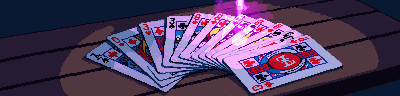
Okay, I have to be upfront here: I haven’t actually cracked open the cards yet. They’re still in their packaging, sitting next to the book, taunting me. But the concept of integrating cards into a TTRPG in a meaningful way is fascinating to me.
Cards add a tactile element that dice alone can’t provide. There’s something about drawing a card, holding it in your hand, deciding when to play it - it creates a different kind of engagement than rolling dice. Dice are immediate and random. Cards can be strategic, held in reserve, played at just the right moment. The tension of “do I use this now or save it for later” is a different kind of drama than “did I roll high enough.”
I’m curious to see how it plays at the table. Theory and practice are different beasts. But the idea is sound, and I’m looking forward to actually using them.
No Plans Yet (But Also…)

I don’t have any immediate plans to run Daggerheart. That’s the honest truth. My gaming schedule is what it is, and adding a new system takes time and energy and the right group willing to learn something new together.
But also… I’m reading this book and my brain is already doing that thing where it starts imagining campaigns. What kind of story would I want to tell in this world? What would a party of characters look like? How would the mechanics support the dramatic beats I love in tabletop games?
So “no plans” is accurate, but “no plans yet” is more honest. This is a book that makes you want to play it. That’s the highest compliment I can give an RPG.
The Gift of Being Known

I keep coming back to Jon. To what it means to have a friend who’s been in your life for a quarter century. To the simple act of receiving a gift that tells you someone actually pays attention.
We don’t see each other as much as we used to. Life happens. Distance happens. Schedules happen. But friendship doesn’t require constant contact to be real. Sometimes it just requires a well-chosen gift at Christmas that reminds you that the connection is still there, still strong, still alive.
Daggerheart is a great RPG book. But it’s also a reminder of why long friendships matter. Jon didn’t just give me a game. He gave me evidence that even after all these years, he still knows who I am.
That’s the real gift.